Quick answer
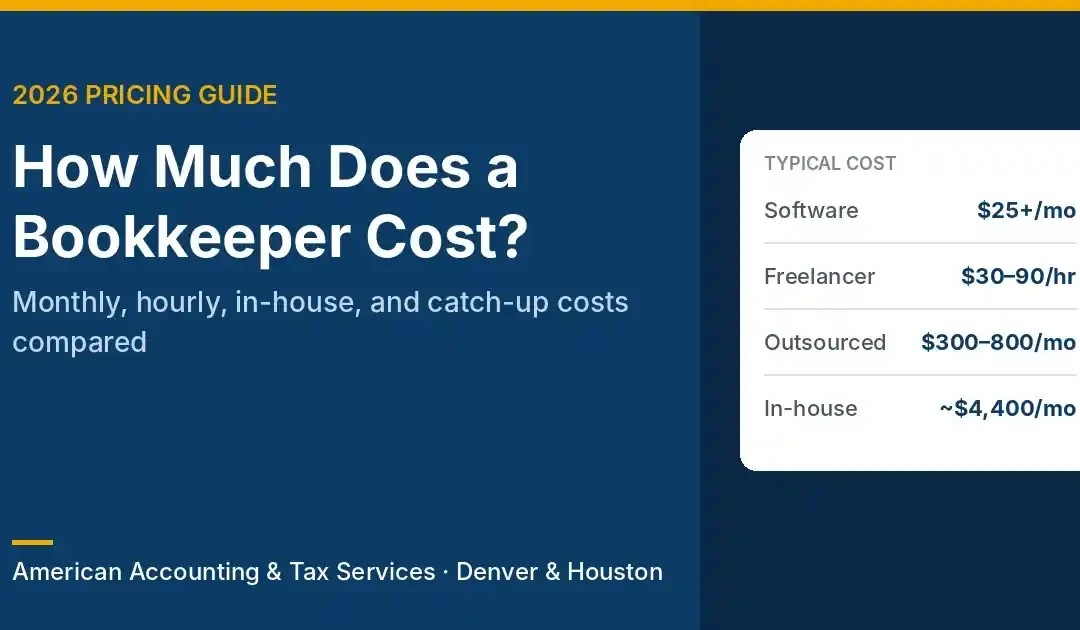
To hire a good bookkeeper, define the work you need (volume, payroll, inventory), check credentials and software skills, look for experience in your industry, check references, and start with a paid trial month before committing. You also need to decide early whether to hire an employee, a freelancer, or a bookkeeping firm. Expect to pay about $30 to $90 an hour for a freelancer, $300 to $800 a month for most outsourced firms, or roughly $54,500 a year in wages and payroll taxes for a full-time employee before benefits.
Contents
- Step 1: Define what you need
- Step 2: Choose an employee, freelancer, or firm
- What each option costs
- Where to find candidates
- Steps 3–8: Credentials, experience, skills, interview, references, trial
- Employee or contractor?
- Set up access and controls
- Your first 90 days
- Red flags
- FAQ
Step 1: Define what you actually need
Bookkeeping needs vary widely. A restaurant, a retail store, and a home-services company each have different requirements. Before you look at candidates, write down:
- Transaction volume: roughly how many sales, bills, and bank transactions you have each month.
- Scope: just recording and reconciling, or also payroll, accounts payable and receivable, inventory, and sales tax.
- Key deadlines: payroll dates, sales tax filings, quarterly estimated taxes, and lender reporting.
- Reporting: how often you want financial statements, and which ones.
Step 2: Choose an employee, freelancer, or firm
| Option | Best for | Watch out for |
|---|---|---|
| In-house employee | High volume or daily on-site tasks | Full employment costs; no backup if they leave |
| Freelance bookkeeper | Simple books on a tight budget | Limited capacity; no second reviewer |
| Bookkeeping firm | Most small businesses that want reliability | Make sure you get a named point of contact |
For a full comparison, see outsourced vs. in-house bookkeeping.
What each option costs
| Option | Typical cost |
|---|---|
| Freelance bookkeeper | About $30–$90 an hour |
| Bookkeeping firm | About $300–$800 a month for most small businesses; more with payroll, inventory, or high volume |
| Full-time employee | $50,670 median wage plus 7.65% employer payroll tax, or about $54,500 a year before benefits, software, and training |
Ranges are typical market figures, not our price list. Wage data: U.S. Bureau of Labor Statistics median annual wage for bookkeeping, accounting, and auditing clerks (May 2025). If your books are behind, expect a one-time catch-up fee before monthly work starts.
Where to find bookkeeper candidates
- Your tax preparer or CPA. They see your books every year and know which bookkeepers deliver clean records.
- Software directories. The QuickBooks ProAdvisor and Xero Advisor directories list certified bookkeepers by location and industry.
- Professional associations. The American Institute of Professional Bookkeepers and the National Association of Certified Public Bookkeepers list credentialed members.
- Peers in your industry. Ask owners of similar businesses who keeps their books and whether they’d hire them again.
- Bookkeeping firms. A firm skips the search entirely: you get a trained team, a reviewer, and backup coverage under one contract.
Step 3: Check credentials
Bookkeepers don’t need a license, so credentials help separate trained professionals from everyone else. Look for:
- Certified Bookkeeper (CB) from the American Institute of Professional Bookkeepers
- Certifications from the National Association of Certified Public Bookkeepers
- QuickBooks ProAdvisor or Xero Advisor certification for the software you use
- Accounting coursework or a degree
Ask candidates without formal credentials how they keep their skills current.
Step 4: Confirm industry experience
Experience in your industry often matters more than total years in the field. A bookkeeper used to restaurants knows tip reporting and food costs, and one used to contractors knows job costing and retainage. Ask what businesses like yours they currently work with.
Step 5: Test technical skills
At a minimum, a qualified bookkeeper should be comfortable with:
- Bank and credit card reconciliations
- Accounts payable, accounts receivable, and payroll processing
- Journal entries and accruals
- Monthly financial statements
- Your cloud accounting software and any connected apps (payments, payroll, receipt capture)
- Sales tax and 1099 reporting. For payments made in 2026, the 1099-NEC threshold is $2,000.
A short practical test tells you more than a resume. Give finalists a sample bank statement and a list of recorded transactions, and ask them to reconcile it and explain any differences. A strong candidate finds the missing deposit and the duplicated bill in minutes and explains how to fix them.
Skip the hiring process
Our bookkeeping team gives you trained professionals and a second reviewer on every file, with no recruiting or training on your end.
Step 6: Ask the right interview questions
- What businesses in my industry do you work with now?
- Walk me through your month-end close. What do I get, and by what date?
- How do you handle a transaction you can’t identify?
- Who reviews your work, and who covers for you when you’re out?
- What access do you need to my bank accounts, and how do you protect it?
- How do you coordinate with my tax preparer at year-end?
- How do you charge: hourly, flat monthly, or per transaction? (Compare their answer with typical bookkeeper costs.)
Step 7: Check references and judge fit
Call at least two current clients. Ask whether the books are always current, how quickly the bookkeeper responds, and whether their tax preparer has had to fix anything. Also notice whether the bookkeeper explains things in terms you understand. You’ll be talking about money with this person every month.
Step 8: Start with a trial period
Begin with one paid month, or a cleanup of a past quarter. Review the reconciliations and statements they produce before you hand over everything.
Employee or contractor?
If you hire an individual, decide how you’ll classify them before the first payment. The IRS looks at behavioral control (do you direct how and when the work is done?), financial control (do they have other clients, set their own rates, and use their own tools?), and the relationship (is the work ongoing and part of your regular operations?). A bookkeeper who works set hours only for you, in your office, with your equipment, is likely an employee, and you’ll need to run payroll and withhold taxes.
An independent bookkeeper or firm with its own clients is usually a contractor. For payments made in 2026, you’ll send a Form 1099-NEC if you pay an unincorporated contractor $2,000 or more during the year, so collect a Form W-9 before the first invoice.
Set up access and controls from day one
- Keep yourself as the primary administrator of your accounting software, and give the bookkeeper their own user login.
- Never share your personal online banking password. Use bank feeds or read-only access instead.
- Require your approval for payments, or dual approval above a set dollar amount.
- Have bank and credit card statements come to you, and review the monthly reconciliation report yourself.
- Turn on two-factor authentication for every account the bookkeeper uses.
- Remove access the same day the relationship ends.
These controls protect you from honest mistakes as well as fraud, and a good bookkeeper will welcome them.
Your first 90 days with a new bookkeeper
- Month 1: Grant access, connect bank feeds, review the chart of accounts, and clean up any open items. Agree on a monthly close date, such as the 15th of the following month.
- Month 2: Receive the first full set of reconciled statements on schedule. Walk through the profit and loss statement and balance sheet together.
- Month 3: Confirm deadlines are being met for payroll, sales tax, and estimated taxes. Decide whether to keep, adjust, or end the arrangement.
Our guide to managing small business finances includes a monthly checklist you can use to review the work.
Red flags to watch for
- Wants full control of payments with no approval from you
- Won’t let you see the accounting software directly
- Can’t explain their month-end process
- No references, or references who aren’t current clients
- Reconciliations that are always “almost done”
Frequently asked questions
How much does it cost to hire a bookkeeper?
It depends on who you hire and how much work there is. Freelancers typically charge about $30 to $90 an hour, most bookkeeping firms charge about $300 to $800 a month, and a full-time employee costs roughly $54,500 a year in wages and payroll taxes before benefits. Ask for a fixed quote after the bookkeeper reviews a month of your transactions. Request a quote from us.
Where can I find a good bookkeeper?
Start with referrals from your tax preparer and other owners in your industry, then check the QuickBooks ProAdvisor or Xero Advisor directories and professional associations such as the AIPB. A bookkeeping firm is the fastest option if you want a reviewed team instead of one person.
What qualifications should a bookkeeper have?
Look for a professional credential such as the AIPB’s Certified Bookkeeper, certification in your accounting software, and proven experience with reconciliations, payroll, and monthly financial statements.
Should I hire a bookkeeper or an accountant?
Hire a bookkeeper for day-to-day recording and reconciliation, and an accountant for tax preparation, planning, and advice. Many small businesses use a firm that provides both. See bookkeeper vs. accountant, how to choose an accountant and our accounting services.
How do I know if my bookkeeper is doing a good job?
Your bank and card accounts reconcile every month, you get financial statements on a set schedule, and your tax preparer gets clean books with few questions.
Can a bookkeeper work remotely?
Yes. With cloud accounting software and secure document sharing, most bookkeeping can be done remotely. Many of our clients in Denver and Houston work with us this way.
Sources: U.S. Bureau of Labor Statistics, Occupational Outlook Handbook, Bookkeeping, Accounting, and Auditing Clerks; IRS, Independent Contractor (Self-Employed) or Employee; IRS Publication 15. More guides: bookkeeping and all small business tax and accounting tips.